

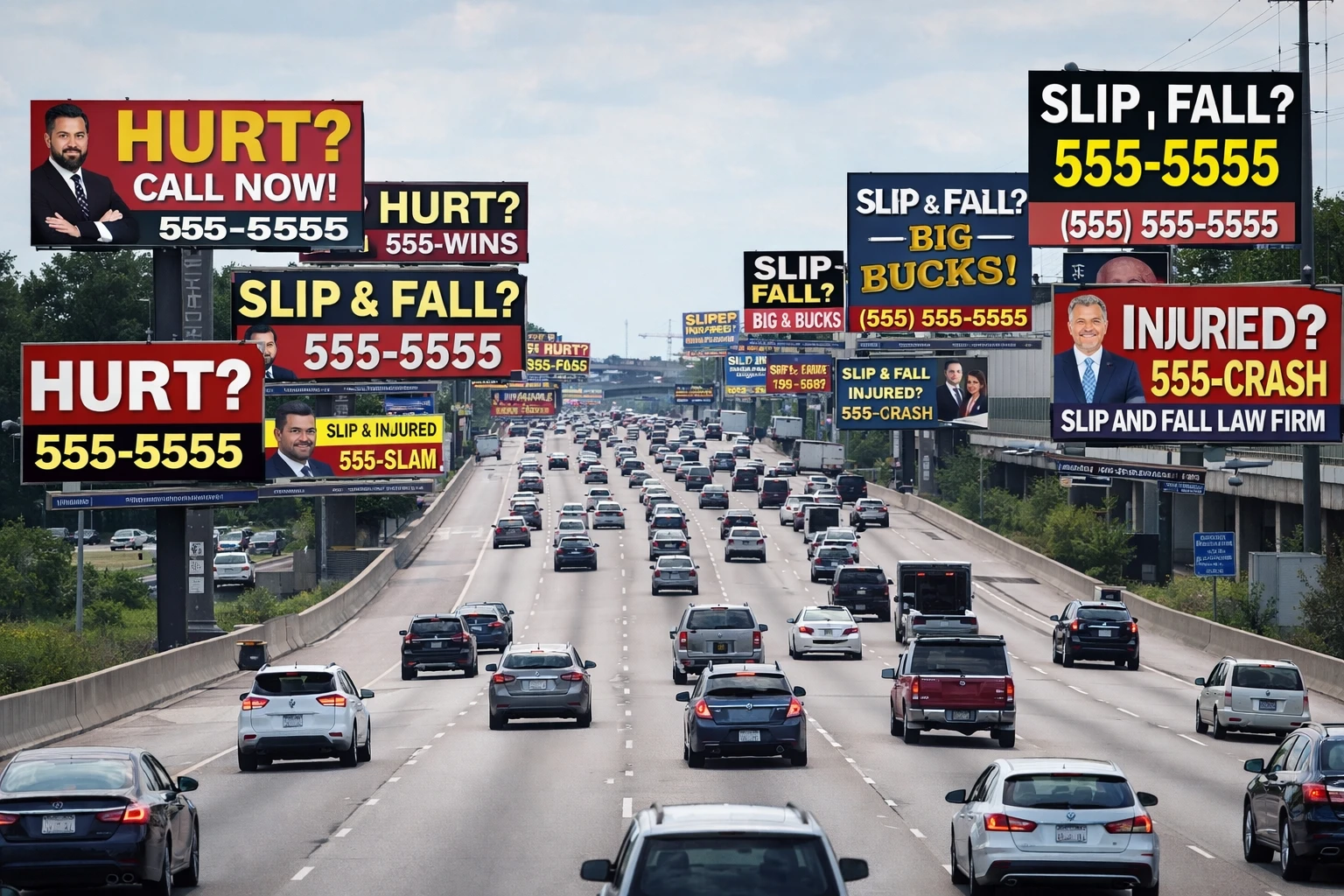
If you’ve ever driven down a major highway in the United States, you’ve seen them—billboards everywhere for slip and fall attorneys.
It raises an uncomfortable question:
👉 Why are slip and fall lawsuits so common in the U.S.?
In my view, part of the answer may lie in something most people never think about:
👉 How we measure floor safety in the first place.
A Hidden Problem: Inconsistent Measurement
In many cases, slip resistance is evaluated using instruments that appear scientific but may not always produce consistent results.
A 2020 peer-reviewed study, Quantifying the Uncertainty in Tribometer Measurements on Walkway Surfaces (Siegmund, Brault, et al.), documented significant variability in measurements obtained from certain tribometers, including:
- Differences between operators
- Differences between devices
- Variability even on the same surface
When a test method cannot reliably reproduce the same result, it raises serious questions about how those results are being used. Let’s name those devices: the English XL and the Brungraber Mark IIIB.
Why This Matters in the Real World
Slip resistance testing plays a direct role in:
- Determining whether a floor is considered “safe”
- Influencing building and maintenance decisions
- Supporting conclusions in legal disputes
If the measurement itself is inconsistent, then conclusions drawn from that data may also be uncertain.
That uncertainty can have real consequences—for property owners, for attorneys, and most importantly, for public safety.
A Different Approach: Measuring What Actually Happens
The pendulum test method (ASTM E303) takes a fundamentally different approach.
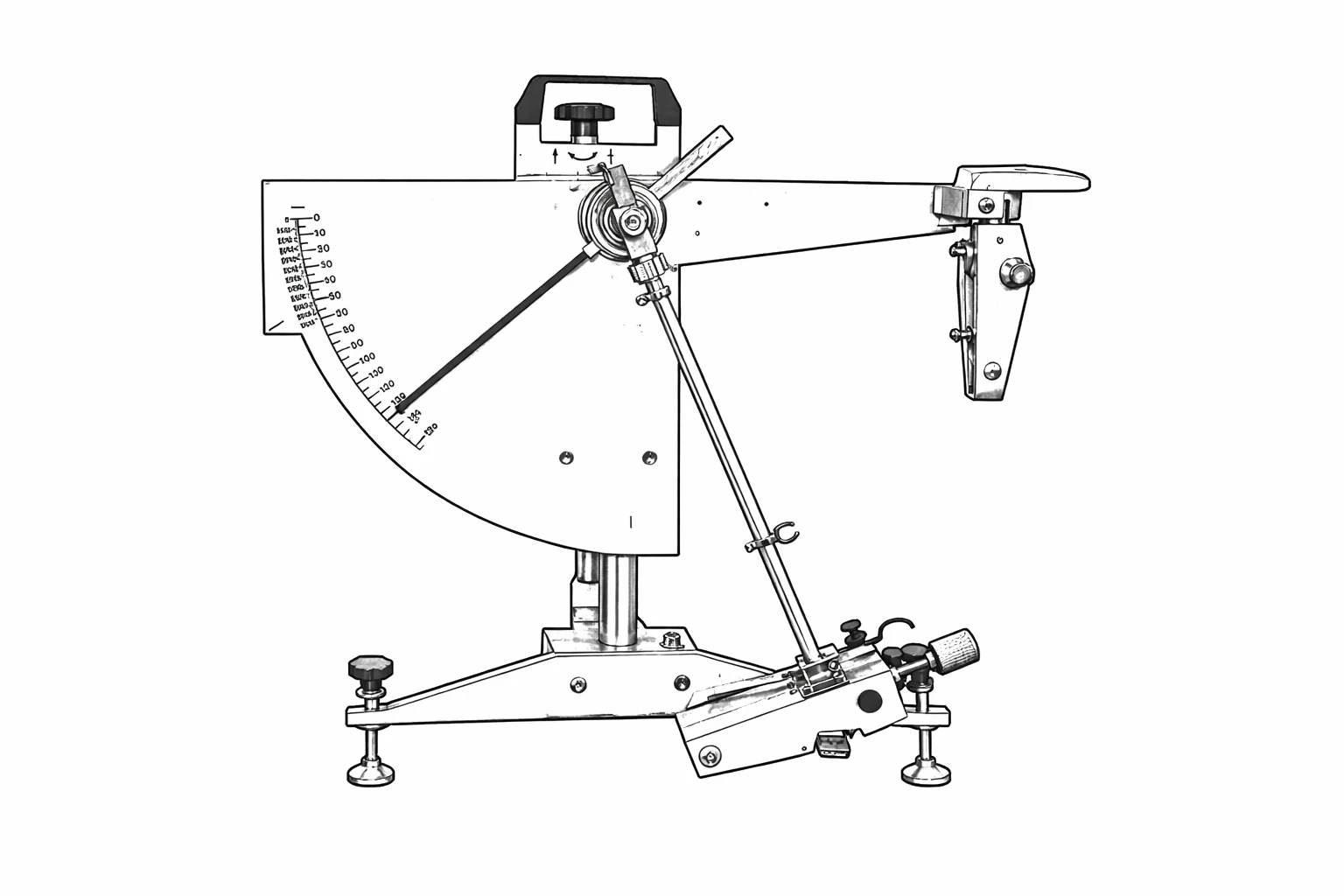
Instead of relying on static measurements, it:
- Simulates the dynamic action of a heel striking the ground
- Reflects real walking conditions
- Has been refined through decades of international research
Because of this, it has become widely used around the world as a tool for assessing slip resistance in a consistent and repeatable way.
An even better test is one created by floor slip resistance testing experts in the USA (not the “experts” that testify full-time in lawsuits, but real experts who are testing for building owners and architects daily), and it’s called the American Floor Safety Alliance’s AFSA FS101-25. It’s a pendulum test that more closely aligns with those used across Europe, the UK, and Australia/New Zealand.
Why the Rest of the World Does It Differently
In many countries—including the UK, Europe, and Australia—the pendulum test is commonly used to:
- Evaluate floor safety
- Guide design and material selection
- Reduce the risk of slip and fall incidents
Its widespread adoption reflects confidence in its ability to produce reliable, repeatable, and meaningful results.
The Bigger Picture
If slip resistance testing is inconsistent, then:
- Hazards may go undetected
- Safe surfaces may be mischaracterized
- Decisions may be made on unreliable data
That doesn’t just affect legal outcomes—it affects whether injuries are prevented in the first place.
Watch the Full Breakdown
In this video, I explain:
- Why some commonly used devices lack precision
- What the scientific literature actually shows
- Why reliable measurement is critical for real-world safety
In Floor Slip Testing – Science Matters!
Final Thought
Slip and fall incidents don’t happen in a vacuum.
If we want to reduce them, we have to start with one simple question:
👉 Are we measuring floor safety the right way?
Or are some “experts” just waiting for them to happen so they can profit off of them.