

Many Polished Concrete Floors are Slippery when Wet
Can polished concrete floors be slippery when wet? Several web sites say yes, but others (mostly polished concrete vendors) say no, it…
Read ArticleA Review of Standards for Pedestrian Slip Resistance Testing
There are a number of floor slip test methods established by standards-setting organizations that assess pedestrian slip resistance. Here we’ll review the…
Read ArticleSurveillance to Detect Slip and Fall Hazards on Commercial Floors
Surveillance of floors to detect spills, dropped produce, and other hazards is an important part of many safety plans, particularly on floors…
Read Article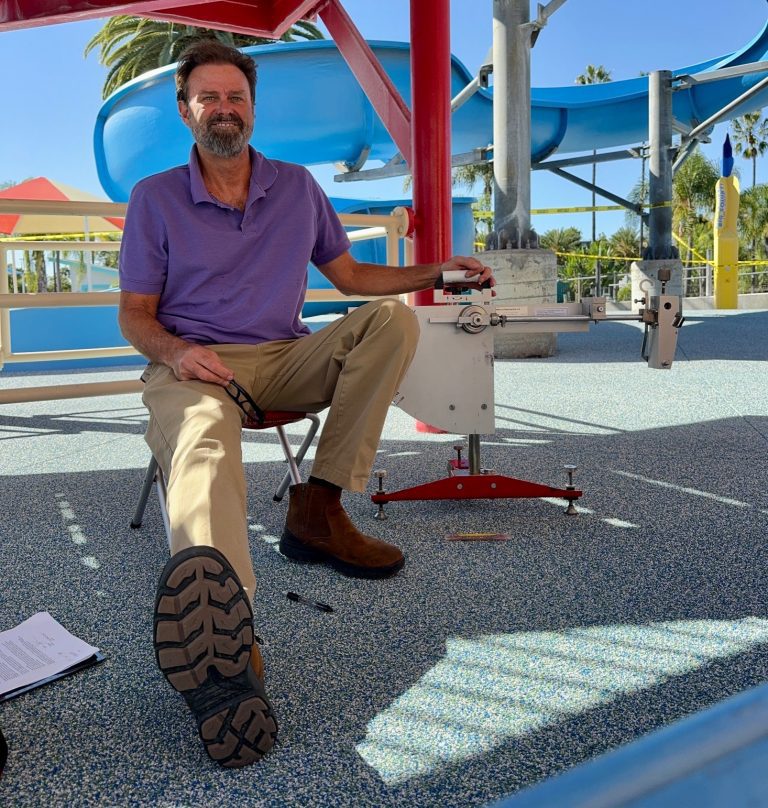
New Study Shows Sotter Engineering to be one of World’s Most Accurate Pendulum Floor Slip Test Labs
A recent global interlaboratory program “Slip Resistance Proficiency Testing — Pendulum Friction Tester,” showed Sotter Engineering Corporation’s Safety Direct America (SDA) floor…
Read ArticleFinancial losses from slip and fall accidents
Slip and fall accidents are the #1 reason Americans show up at emergency rooms, according to data from the CDC. Slippery floors…
Read ArticleRoughness and Wet Floor Slip Resistance
We all know intuitively that roughness has a lot to do with floor slip resistance. Very smooth floors tend to have low…
Read ArticleFloor Slip Rating: SCOF vs. DCOF
Static coefficient of friction (SCOF) was formerly used to measure the slip resistance of a wet floor in the USA, but the…
Read ArticleANSI A326.3 Acutest Does Not Predict Likelihood of Slip
A widely used floor friction test, American National Standards Institute A326.3, states in its introduction that “it can provide a useful comparison…
Read ArticleHow does ANSI A326.3 DCOF compare with Pendulum Test Value (PTV)? ANSI A326.3 is clearly not a safety test
The most recent American National Standards Institute (ANSI) dynamic coefficient of friction (DCOF) test method, ANSI A326.3, states that “hard surface flooring…
Read Article