

Slip-and-fall incidents remain one of the leading causes of serious injury in public and commercial spaces. Because of that, the tools used to assess floor safety must be accurate, repeatable, and meaningful in real-world conditions. Unfortunately, not all slip-resistance test devices meet that standard.
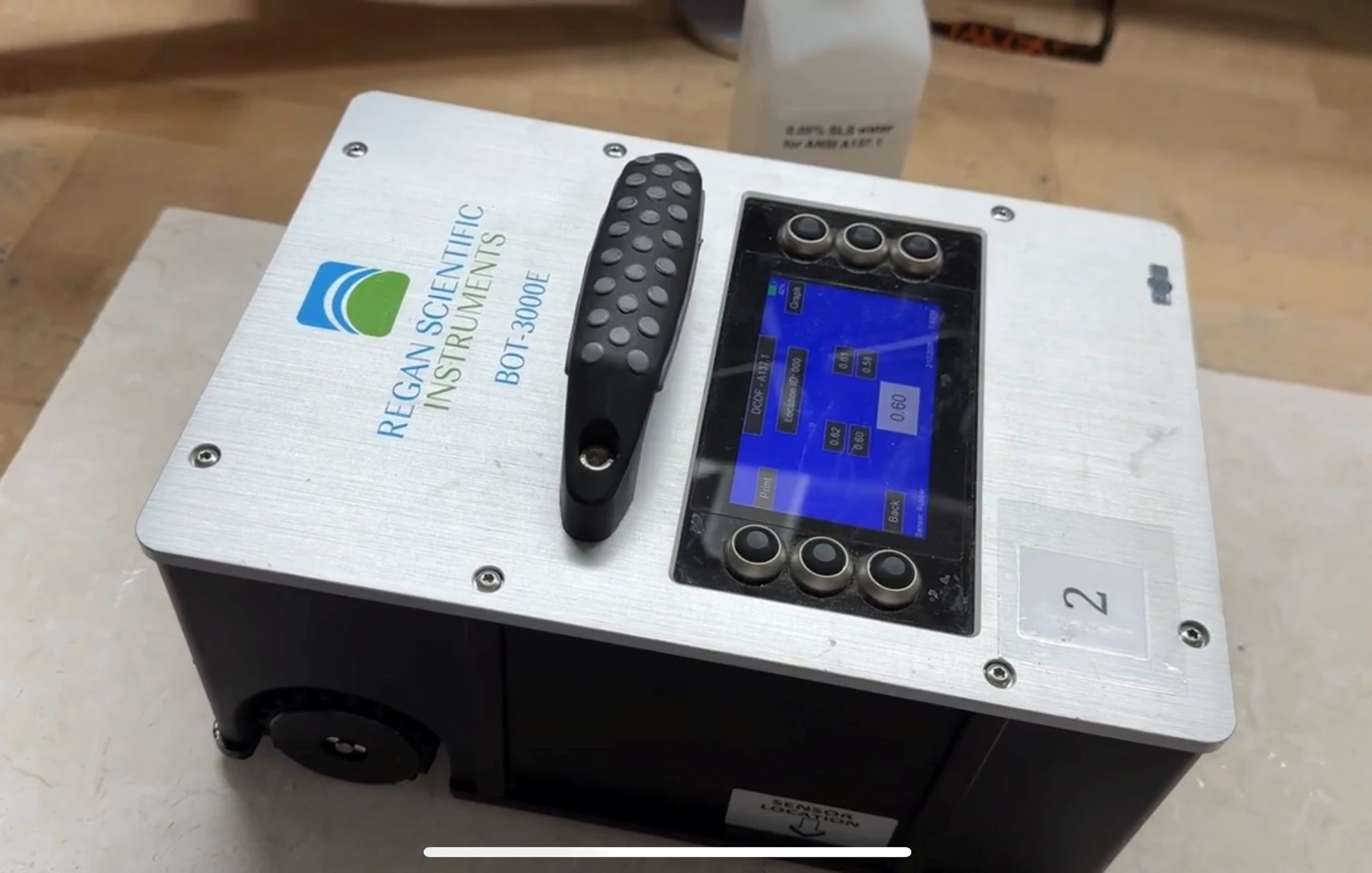
In the video accompanying this article, we demonstrate why the pendulum slip resistance tester has earned worldwide acceptance, and why the BOT-3000E tribometer is fundamentally unreliable when used as a safety assessment tool.
The Problem With the BOT-3000E
The BOT-3000E is often marketed as a device capable of determining whether a floor is “safe” or “unsafe.” However, both practical testing and the device’s own governing test method disclaimers make it clear that this claim does not hold up under scrutiny.
In real-world demonstrations, the BOT-3000E frequently:
- Indicates that obviously slippery floors are not slippery
- Indicates that clearly safe floors are slippery
- Produces results that conflict with human experience and incident history
This inconsistency is not accidental—it is a known limitation of the device and the test method it follows. In fact, the BOT-3000E test method includes multiple disclaimers stating that:
- Results do not predict real-world slip-and-fall risk
- Results should not be used to determine floor safety
- Results should not be relied upon in isolation
Despite these warnings, the device is often used in legal, insurance, and facilities contexts as though it provides a definitive answer about safety. That misuse creates serious risk.
Why This Matters Legally and Practically
If a testing device routinely declares slippery floors “safe,” it creates a false sense of security. When a slip-and-fall injury occurs—as it often does—the question becomes:
Why was an unreliable test method relied upon when safer, globally accepted alternatives exist?
Organizations that rely on the BOT-3000 as a safety assessment tool may find themselves exposed to:
- Increased slip-and-fall injury claims
- Greater legal liability
- Challenges to expert testimony
- Loss of credibility in court
The Pendulum Tester: A Global Standard
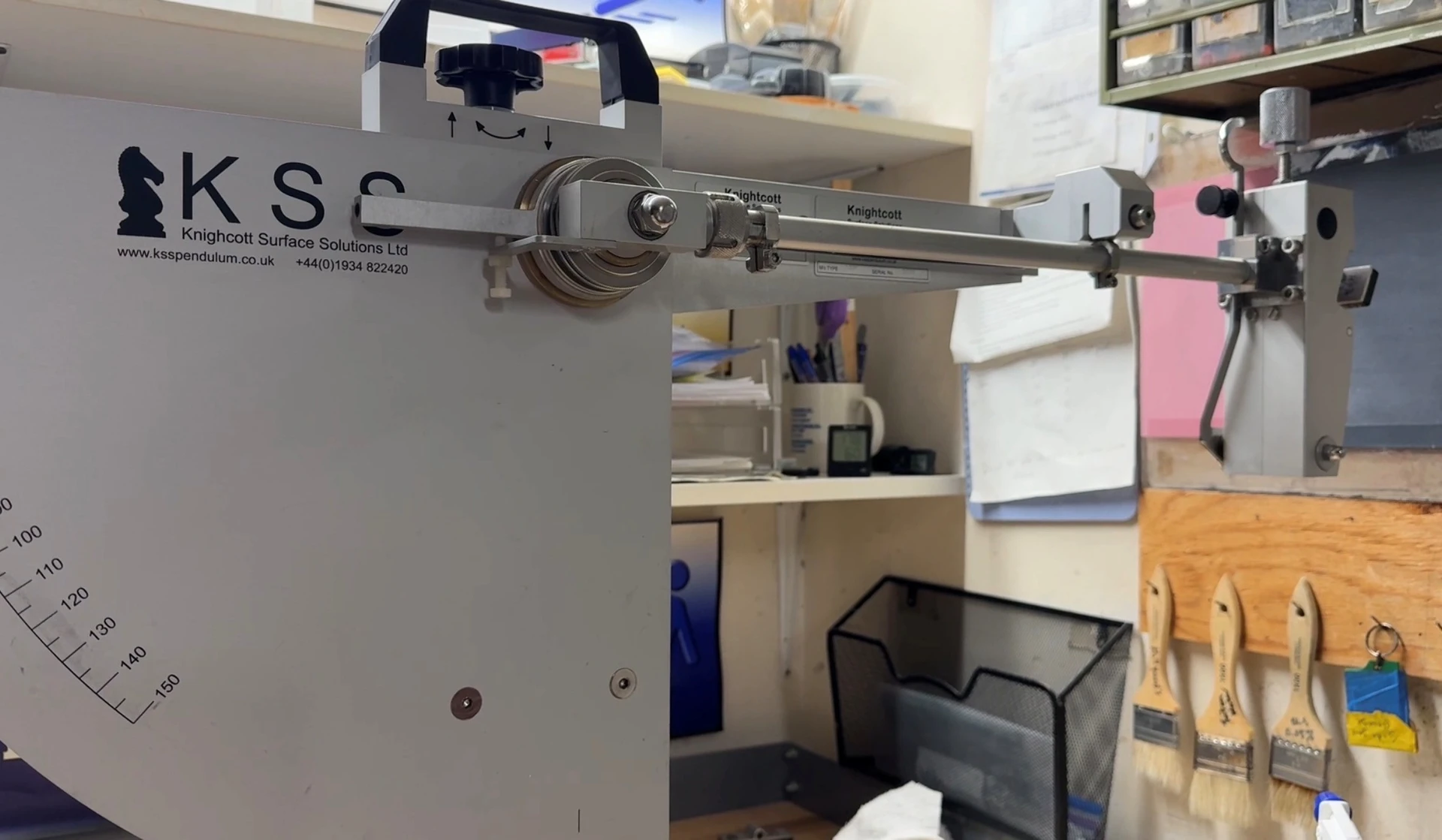
By contrast, the pendulum slip resistance tester has been in use for decades and is recognized by standards bodies in over 50 countries. Nearly every nation with a formal standards authority has published a pendulum-based test method.
In the United States, that method is ASTM E303-22, which measures dynamic slip resistance in a way that closely replicates the heel strike of a walking person—especially in wet or contaminated conditions, where most slip-and-fall injuries occur.
Key advantages of the pendulum tester include:
- Proven correlation with real-world slip incidents
- Repeatable, reproducible results
- Global acceptance in regulations, codes, and litigation
- Meaningful differentiation between safe and unsafe surfaces
A Tool vs. a Paperweight
In the video, we refer to the BOT-3000E—somewhat bluntly—as a “$9,000 paperweight.” That phrasing is intentional, but the point is not sarcasm. The point is this:
A device that cannot reliably distinguish between safe and unsafe floors has no place being used as a safety decision tool—especially when the test method itself explicitly warns against such use.
The Takeaway
If you are responsible for floor safety—whether as a facility manager, architect, consultant, attorney, or risk professional—the choice of test method matters.
- Using a globally accepted, biomechanically relevant test helps prevent injuries.
- Using an unreliable test method increases the likelihood of accidents—and lawsuits.
Watch the video above to see these differences demonstrated clearly and objectively. Then ask yourself:
Is the goal to check a box—or to actually prevent people from getting hurt?