

For decades, I have worked in the field of slip resistance testing and floor safety. During that time, I’ve seen something deeply troubling develop in the United States: unreliable testing methods and questionable expert testimony increasingly influencing slip-and-fall litigation, building decisions, and public safety.
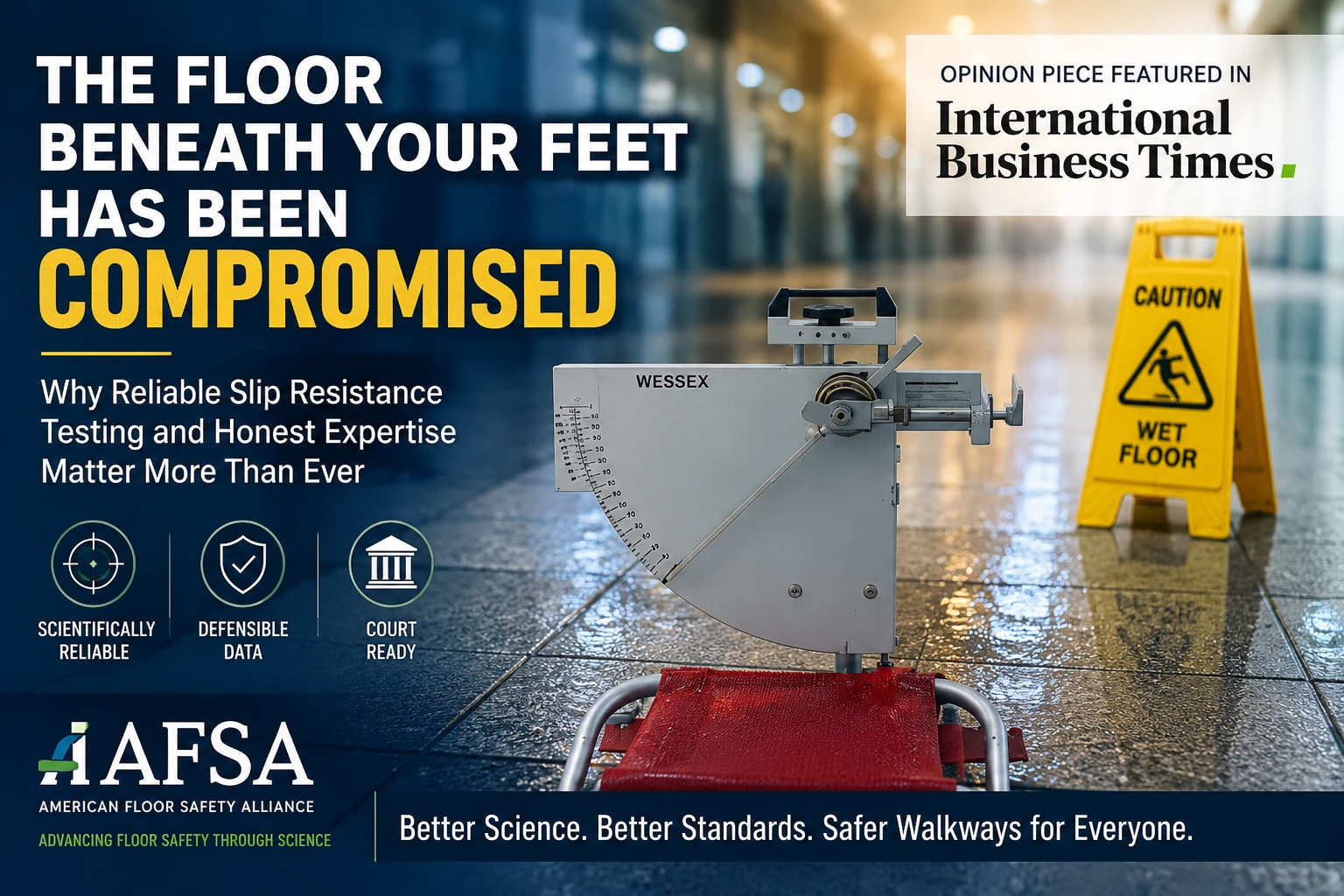
That is why I recently wrote an opinion piece published by International Business Times discussing what I believe is a growing problem in the floor safety industry.
👉 Read the full article here:
International Business Times Opinion Piece
Why I Made This Video
The short video accompanying this post is a direct introduction to the concerns raised in the article.
Too often, floors are labeled “safe” using testing methods that:
Lack meaningful precision
Produce inconsistent results between operators
Fail to reflect real-world pedestrian movement
Continue to be used despite significant scientific criticism
Meanwhile, internationally recognized dynamic methods like the ASTM E303 and AFSA FS101-25 continue to demonstrate strong repeatability and decades of successful use around the world.
This is not about taking sides in litigation.
It is about ensuring that:
building owners,
attorneys,
architects,
insurers,
and courts
have access to reliable, scientifically defensible information.
A Call for Better Standards
The purpose of speaking publicly about these issues is not controversy for the sake of controversy. The goal is to encourage the adoption of more reliable, evidence-based approaches to floor safety.
In my opinion, the United States has fallen behind much of the world when it comes to meaningful slip resistance assessment. That needs to change.
The stakes are real:
preventable injuries,
unsafe flooring conditions,
and legal outcomes influenced by questionable methodology.
Better science leads to better safety.
Moving the Conversation Forward
I believe the future of floor safety depends on:
scientifically reliable testing,
transparency,
repeatability,
and methods that correlate to real-world pedestrian movement.
That is a major reason behind the formation of the American Floor Safety Alliance (AFSA) — an organization focused on advancing credible, practical, and evidence-based floor safety standards.
Watch the Video and Read the Article
I encourage you to watch the video, read the full opinion piece, and consider the broader implications for safety, liability, and public trust.
Professional “Experts” Are to Blame!
👉 Read the article here:
International Business Times Opinion Piece