

For decades, building owners, architects, attorneys, and safety professionals in the United States have been told that certain floor slip resistance testing methods are “accepted,” “validated,” or scientifically reliable. But what happens when some of those methods fail precision testing, are withdrawn from standards organizations, or cannot reliably identify slippery walking surfaces in the real world?
That question is at the heart of my latest opinion piece published in International Business Times.
The article examines a growing concern within the floor safety industry: the disconnect between scientifically repeatable slip resistance testing and the methods that are still too often relied upon in litigation, construction specifications, and expert testimony.
Why This Conversation Matters
Slip-and-fall accidents are not trivial events. They can lead to serious injuries, life-altering disabilities, and enormous financial consequences for businesses and property owners. Yet despite the seriousness of these incidents, many people remain unaware that some historically used testing devices and standards have faced significant scientific criticism.
In the article, I discuss how several ASTM floor safety standards associated with static coefficient-of-friction testing methods were ultimately withdrawn. In some cases, the standards lacked approved precision statements. In others, the methods failed to reliably distinguish dangerously slippery surfaces from safer ones.
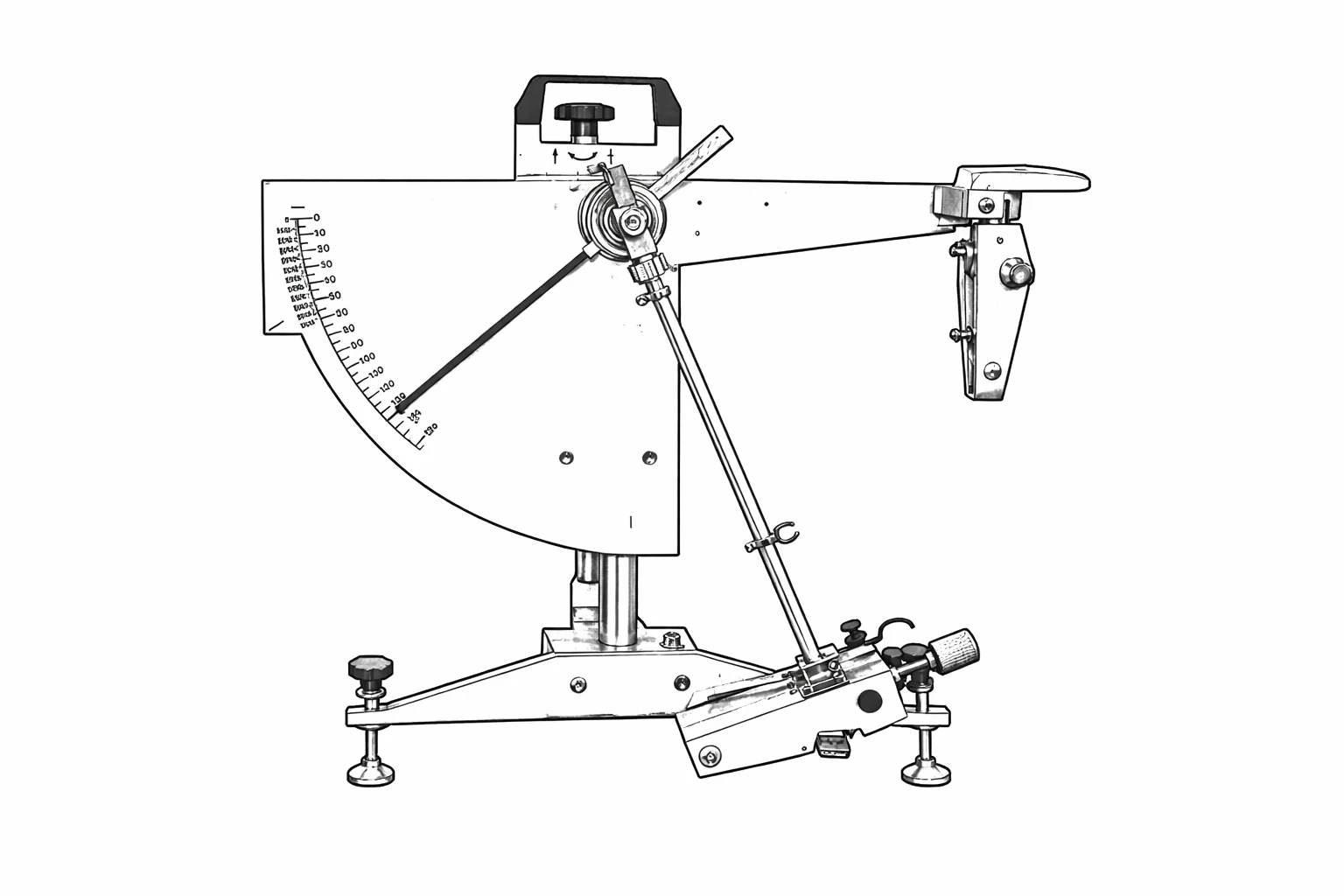
At the same time, internationally recognized dynamic testing methods — particularly pendulum-based methodologies — have continued to evolve and gain acceptance across Europe, Australia, Asia, and many other parts of the world.
Precision Matters
One of the central themes of the article is precision and repeatability.
If a scientific instrument cannot produce consistent, repeatable results, its usefulness in safety assessment becomes questionable. This is especially important in legal disputes where expert testimony can heavily influence outcomes.
The public deserves better than inconsistent methodologies. Architects deserve better guidance. Property owners deserve more reliable risk assessment tools. And courts deserve scientifically defensible data.
That does not mean every floor is either “safe” or “unsafe.” Real-world floor safety is more nuanced than that. But it does mean we should prioritize testing methods that have demonstrated reliability, reproducibility, and meaningful correlation to pedestrian slip risk.
A Global Perspective on Floor Safety
One of the biggest misconceptions in the United States is that domestic practices automatically represent the global scientific consensus. In reality, much of the world has moved toward dynamic slip testing methods that better simulate actual pedestrian movement.
The pendulum test, for example, has been used internationally for decades and continues to serve as a foundational methodology in numerous countries because of its repeatability and extensive research history.
As someone who has spent years studying floor safety standards and performing slip resistance evaluations, I believe the conversation must continue moving toward evidence-based methodology rather than legacy assumptions.
This Is About Prevention
The goal is not litigation. The goal is prevention.
When scientifically credible testing is used properly, dangerous surfaces can often be identified before injuries occur. That benefits everyone:
- pedestrians,
- businesses,
- architects,
- insurers,
- and the legal system itself.
Floor safety should not be driven by outdated assumptions or unreliable measurements. It should be driven by data.
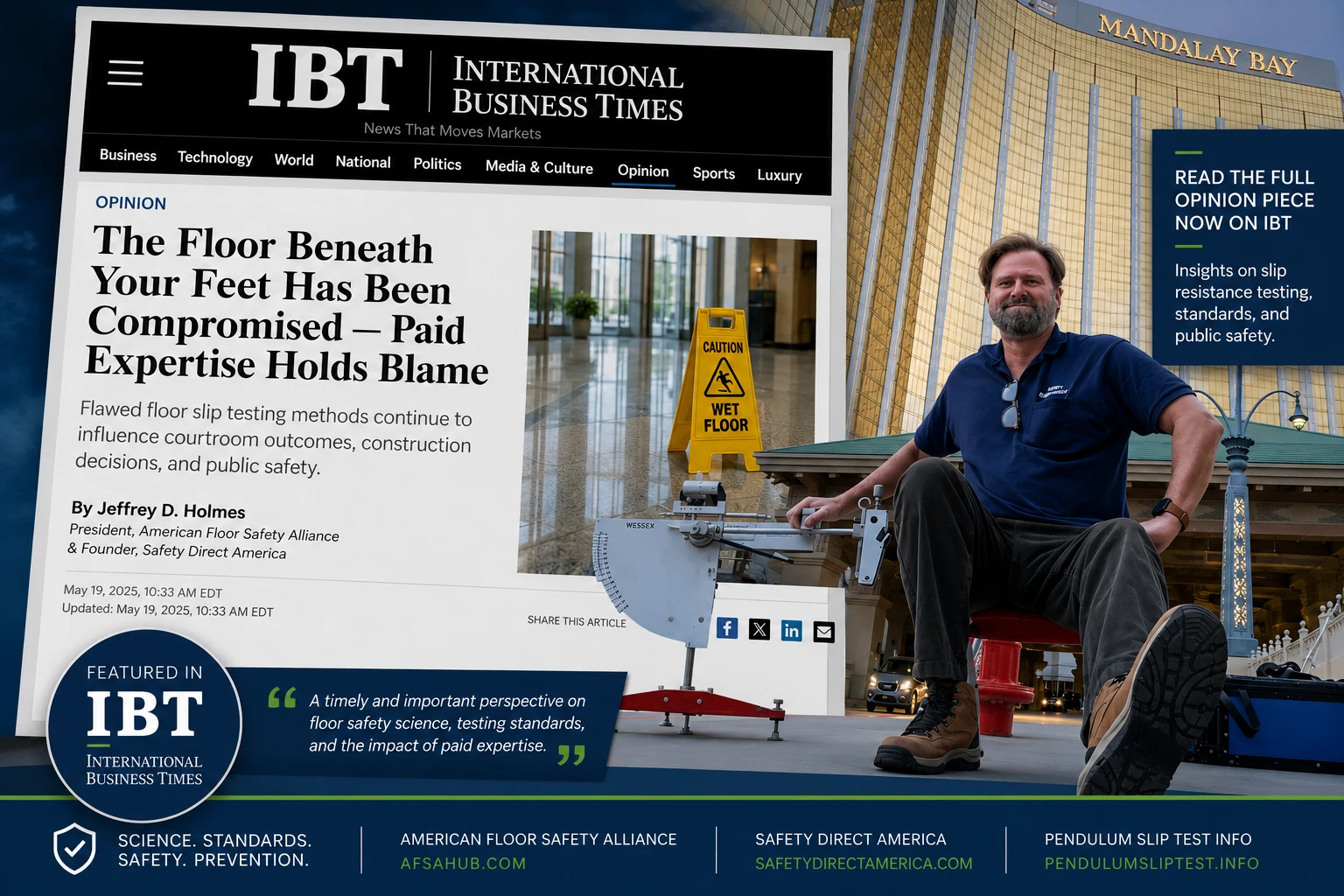
Read the Full International Business Times Article
You can read the full opinion piece here:
The Floor Beneath Your Feet Has Been Compromised — Paid Expertise Holds Blame
For additional information about pendulum slip testing and modern floor safety methodology, visit our page on pendulum testing
or visit the American Floor Safety Alliance