

Slip-and-fall litigation in the United States has developed a striking scientific divide. In courtroom after courtroom, defense experts rely on the English XL Variable Incidence Tribometer or the Brungraber Mark IIIB to generate a coefficient of friction and then testify that the floor “met industry standards.” The testimony is presented as scientific, objective, and dispositive. But when examined under Federal Rule of Evidence 702 and Daubert v. Merrell Dow Pharmaceuticals, Inc., 509 U.S. 579 (1993), serious reliability concerns emerge.
At the same time, another instrument—the pendulum tester—has a peer-reviewed, published test method used in over 50 nations across five continents and an American standard, ASTM E303, with established precision and repeatability data. When reliable, globally adopted methods exist, courts should ask why litigation continues to depend on instruments with documented precision problems and withdrawn ASTM methods. This is not about attacking individuals. It is about applying Rule 702 correctly.
The Governing Legal Standard
Under Federal Rule of Evidence 702, expert testimony must be based on reliable principles and methods that are reliably applied to the facts of the case. In Daubert, the Supreme Court identified several reliability factors: testability, peer review, known or potential error rate, existence of standards controlling the technique’s operation, and general acceptance. 509 U.S. at 593–94. In General Electric Co. v. Joiner, 522 U.S. 136 (1997), the Court emphasized that trial courts may exclude expert testimony where there is “too great an analytical gap” between the data and the opinion offered. In Kumho Tire Co. v. Carmichael, 526 U.S. 137 (1999), the Court made clear that Daubert applies to all technical and engineering testimony, not just laboratory science. Most recently, the Supreme Court reiterated in Sardis v. Overhead Door Corp., 10 F.4th 268 (4th Cir. 2021), that courts must conduct a meaningful reliability analysis when engineering measurement methods are offered as expert proof. The burden rests squarely on the proponent. See Daubert, 509 U.S. at 592 n.10.
When applied rigorously, these principles raise substantial concerns regarding English XL and Brungraber Mark IIIB testimony.
The Precision Problem: Withdrawn ASTM Methods
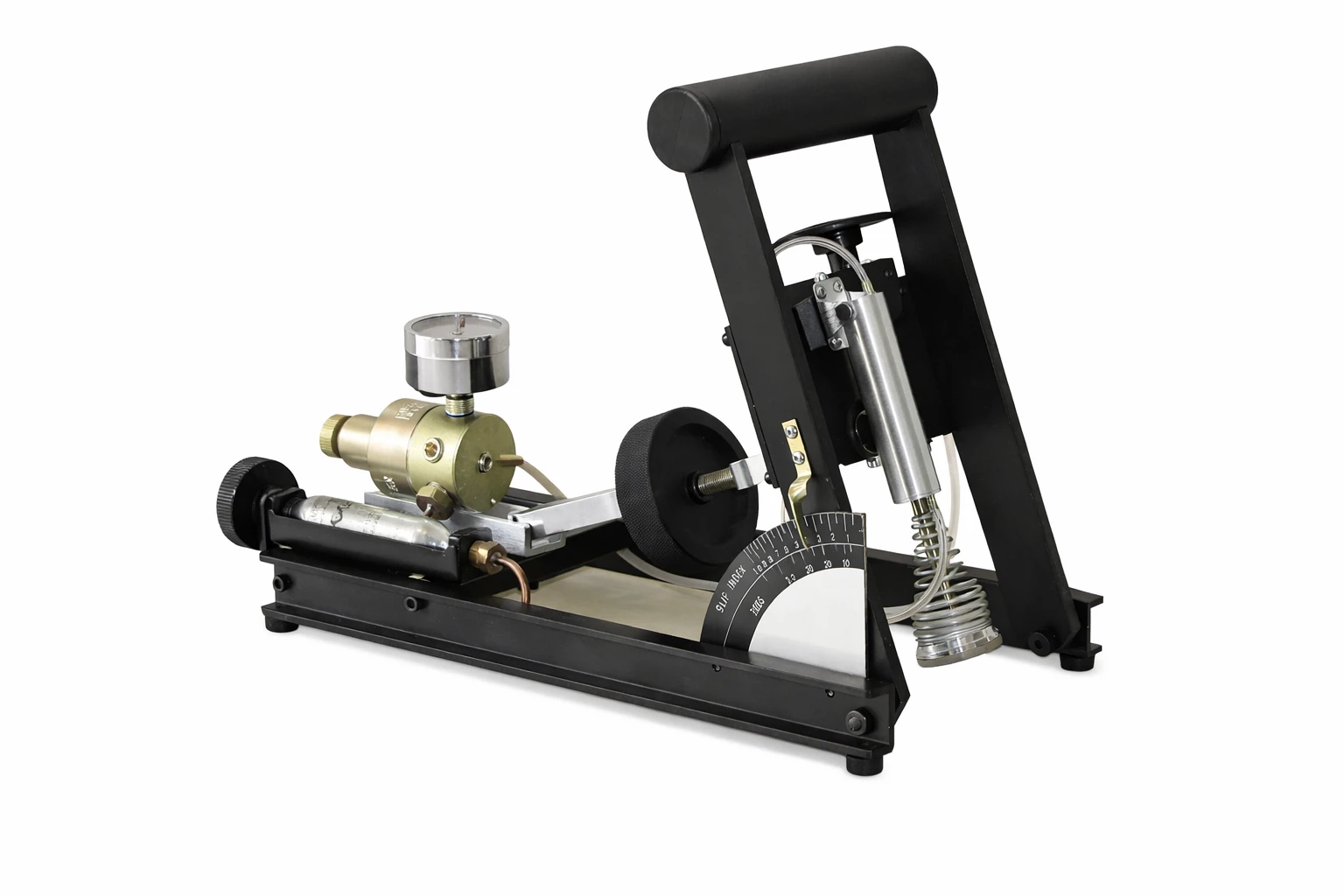
Both the English XL and the Brungraber Mark II were associated with ASTM test methods that were withdrawn in 2006 due to the absence of a reasonable precision statement. ASTM precision statements quantify repeatability and reproducibility; they establish inter-laboratory variance and define acceptable measurement uncertainty. Without a precision statement, a method lacks a quantified error rate—one of Daubert’s central factors. Courts routinely exclude engineering testimony where error rates are unknown or unsupported. See Claar v. Burlington N. R.R., 29 F.3d 499 (9th Cir. 1994) (excluding expert testimony lacking reliable methodology); Weisgram v. Marley Co., 528 U.S. 440 (2000) (affirming exclusion where reliability was not demonstrated). If a method was withdrawn for failure to establish precision, that history is directly relevant to Rule 702’s reliability inquiry.
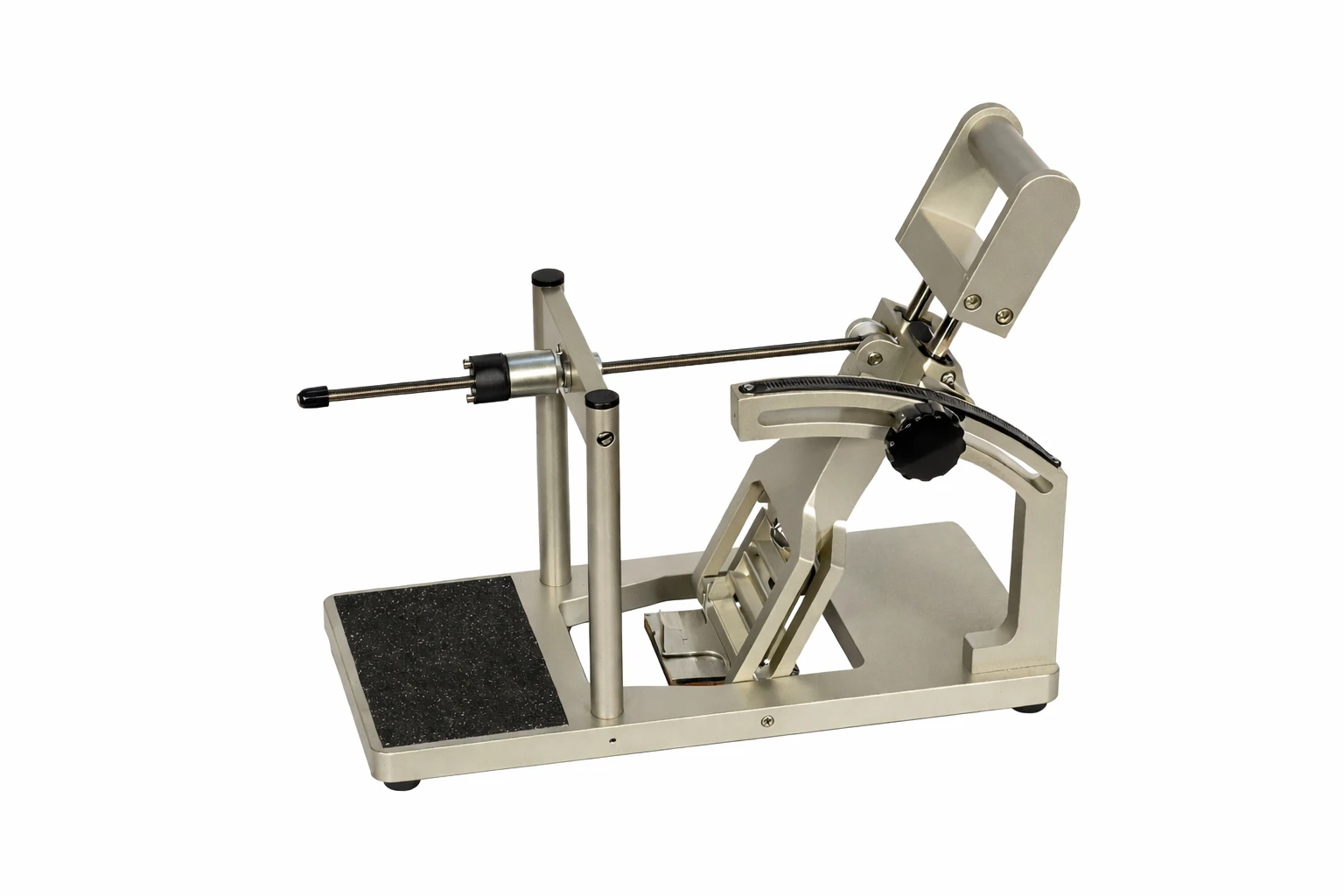
The Brungraber Mark IIIB operates under the same fundamental sliding principle as the withdrawn Mark II method. Design changes do not eliminate the need for demonstrated reproducibility and quantified precision. Daubert does not allow courts to assume reliability where the underlying methodology lacks documented repeatability metrics.
Published Evidence of Operator Variability
A recently published study reported that different operators using these tribometers obtained materially different results when testing the same tile surface. Even more concerning, the same operator obtained different results on repeated trials of the identical surface. Repeatability and reproducibility are core scientific requirements. If results vary meaningfully depending on who performs the test—or when it is repeated—the methodology’s reliability is compromised. Courts have excluded measurement-based testimony where variability and operator dependence undermine reliability. See United States v. Hebshie, 754 F.Supp.2d 89 (D. Mass. 2010) (excluding fire-origin methodology lacking demonstrated reliability); McClain v. Metabolife Int’l, Inc., 401 F.3d 1233 (11th Cir. 2005) (excluding expert testimony where methodology lacked reliable scientific foundation). Demonstrated operator variability directly implicates Daubert’s error-rate factor.
ASTM F2508: Discrimination Is Not Precision
Proponents frequently cite ASTM F2508 as validation. ASTM F2508 requires an instrument to correctly rank three reference tiles—low, medium, and high slip resistance. If the tribometer can identify the relative order, it “passes.” But this is not a precision study. It does not establish repeatability within statistical tolerance ranges. It does not quantify inter-operator reproducibility. It does not provide numeric error rates or confidence intervals. It does not correlate numeric outputs to real-world slip events. It is an ordinal ranking exercise.
Daubert requires reliability, not mere discrimination. Courts reject methodologies that rely on superficial validation rather than rigorous measurement standards. See In re Paoli R.R. Yard PCB Litig., 35 F.3d 717 (3d Cir. 1994) (emphasizing error rates and reliability); Amorgianos v. Nat’l R.R. Passenger Corp., 303 F.3d 256 (2d Cir. 2002) (excluding expert testimony where methodology was insufficiently reliable). The ability to rank three known samples does not establish that a device measures friction with scientific precision across real-world conditions. Passing F2508 does not answer Daubert’s core questions about error rate and reproducibility.
The Pendulum: A Contrast in Validation
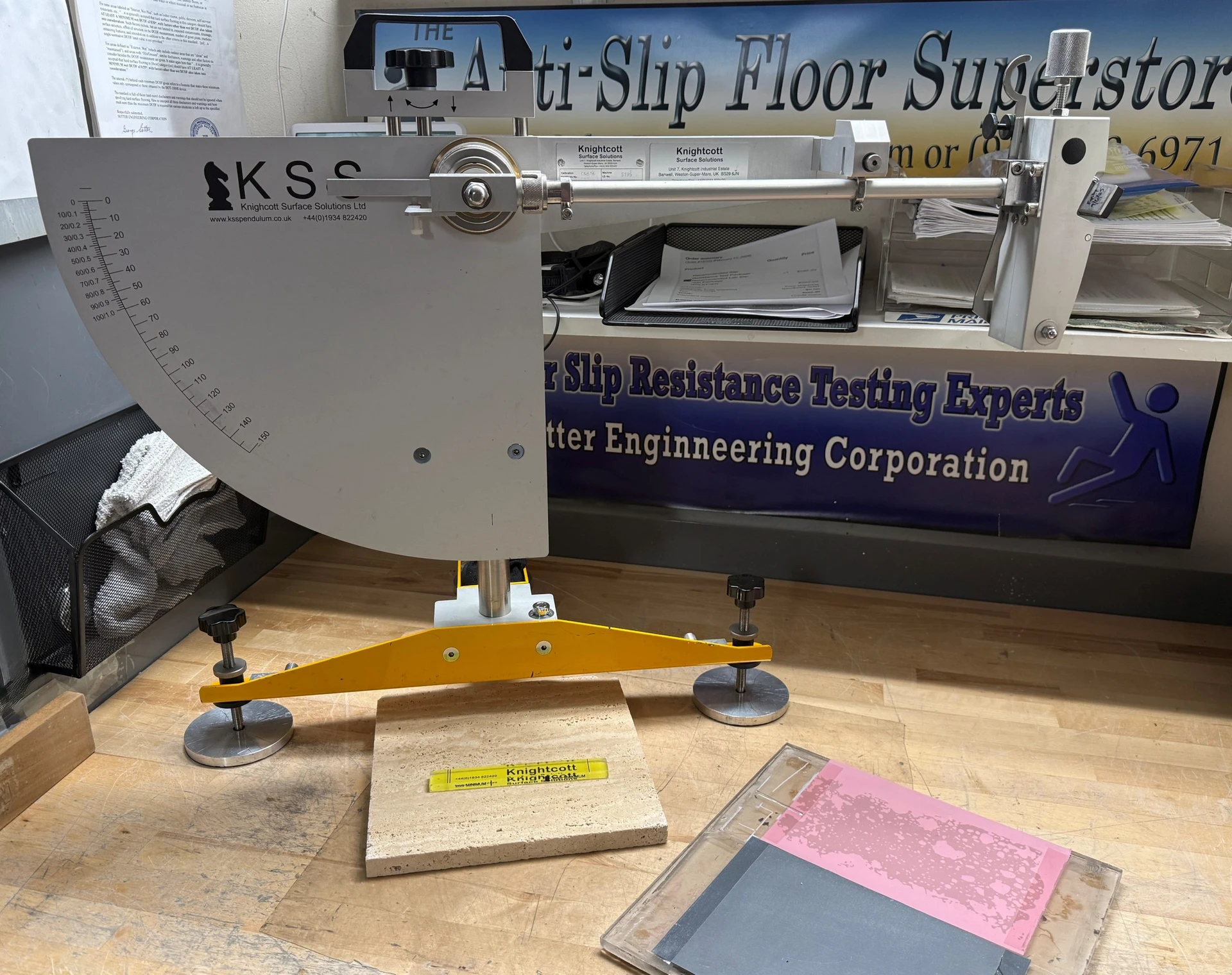
The pendulum tester provides a contrast. It has a peer-reviewed methodology adopted in more than 50 nations across five continents. It has an American standard, ASTM E303. It has established precision and reproducibility data. It has documented repeatability studies. Unlike the tribometers discussed above, the pendulum method includes quantified precision statements and inter-laboratory validation. Under Daubert’s general-acceptance factor, international adoption and regulatory use are highly relevant. See Kumho Tire, 526 U.S. at 151 (reliability depends on the nature of the technique and its acceptance). When one method has broad scientific validation and documented precision, and another lacks quantified error rates and demonstrates operator variability, Rule 702 demands scrutiny.
The relevant inquiry is not whether English XL or Mark IIIB can generate a number. The inquiry is whether that number is produced by a method that meets Daubert’s reliability factors.
Federal-Style Daubert Motion Structure
UNITED STATES DISTRICT COURT
[District]
[Plaintiff] v. [Defendant]
PLAINTIFF’S MOTION TO EXCLUDE TRIBOMETER TESTIMONY UNDER FEDERAL RULE OF EVIDENCE 702
I. INTRODUCTION
Defendant’s expert intends to offer testimony that the subject floor was “not unreasonably slippery” based solely on English XL and/or Brungraber Mark IIIB testing. Under Rule 702 and Daubert, the proponent must establish reliability, including known error rates and reproducibility. ASTM F2508 does not establish those elements, and prior ASTM methods were withdrawn for lack of precision.
II. LEGAL STANDARD
Under Rule 702 and Daubert, courts evaluate testability, peer review, error rate, standards, and general acceptance. See Daubert, 509 U.S. at 593–94; Kumho Tire, 526 U.S. 137. The proponent bears the burden.
III. ARGUMENT
A. Withdrawal of ASTM Methods Demonstrates Lack of Established Precision.
B. ASTM F2508 Does Not Establish Repeatability or Error Rate.
C. Published Operator Variability Undermines Reliability.
D. Failure to Address More Rigorously Validated Alternatives Such as ASTM E303 Further Undermines Reliability.
E. Under Joiner, an analytical gap exists between limited ranking validation and the sweeping conclusion that a surface is safe.
IV. CONCLUSION
Because the methodology lacks quantified precision, known error rate, and demonstrated reproducibility, and because ASTM F2508 does not cure these deficiencies, testimony based solely on English XL or Brungraber Mark IIIB testing should be excluded.
Deposition Questions Targeting F2508 and Reliability

- ASTM F2508 requires ranking three tiles, correct?
- It does not quantify inter-laboratory reproducibility, correct?
- It does not establish numeric error rate, correct?
- Passing F2508 does not guarantee identical results across operators, correct?
- Are you aware the ASTM methods previously associated with these devices were withdrawn for lack of a precision statement?
- What is the known margin of error for your instrument?
- What statistical confidence interval applies to your measurement?
- Are you aware of published studies demonstrating operator variability?
- Did you perform inter-operator reproducibility testing in this case?
- Are you aware ASTM E303 provides a precision statement for pendulum testing?
- Why did you not conduct ASTM E303 testing?
- Can you identify peer-reviewed research correlating your instrument’s output to actual fall rates?
The Bottom Line
Daubert is not satisfied by tradition, convenience, or litigation custom. It requires reliability. Where ASTM methods were withdrawn for lack of precision, where published studies show operator variability, where F2508 establishes only tile ranking rather than measurement precision, and where more rigorously validated international methods exist, courts should not admit tribometer testimony without careful scrutiny. Rule 702 demands more than a number—it demands a reliable scientific foundation.